Bioregional chair
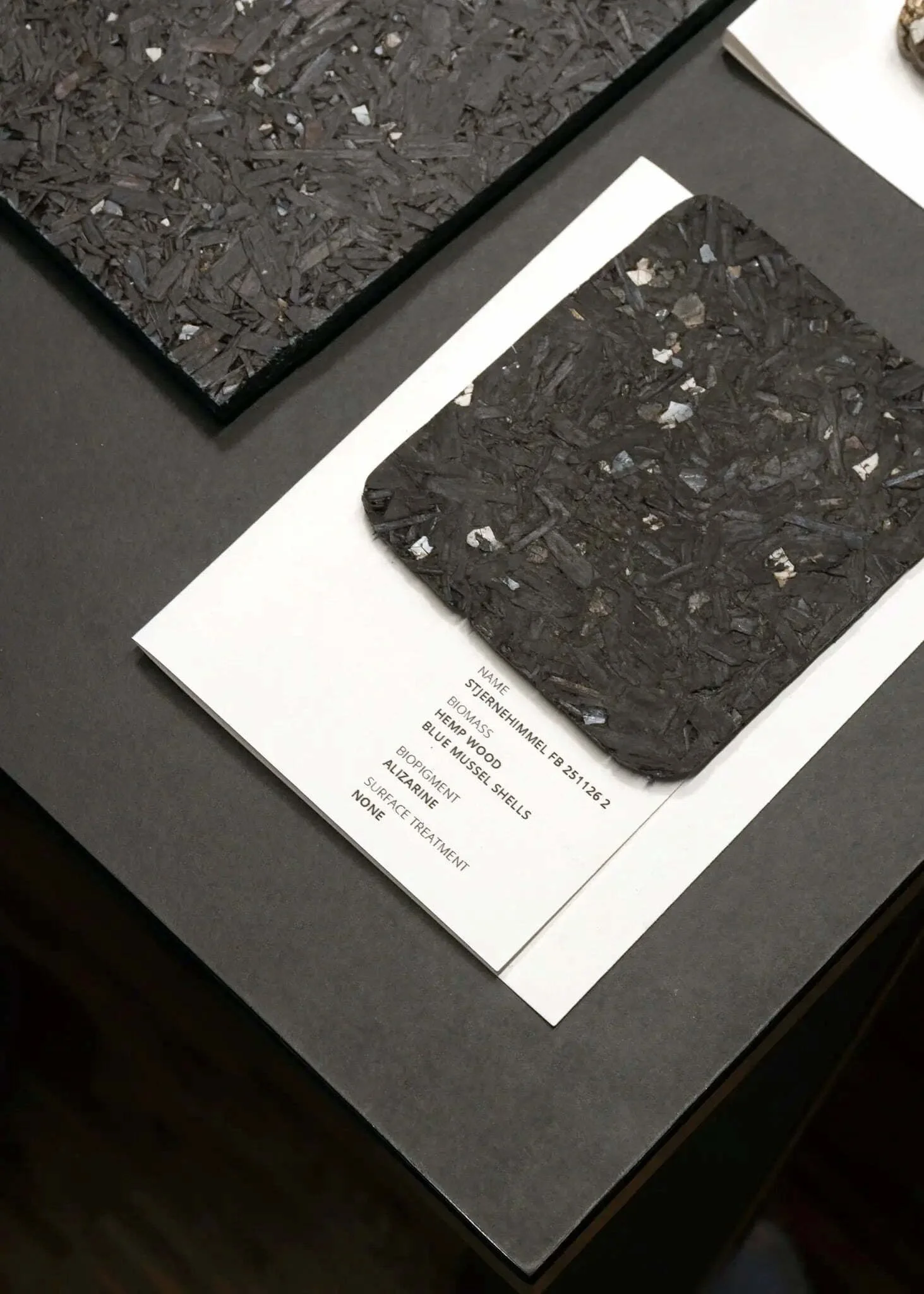
“Starry Sky”, combines hempwood with crushed mussel shells. The shells create scattered, light-reflecting particles across the surface, giving the material a distinct visual texture. | Photo: © Bioregion Institute & Flokk 2026.
An ongoing collaboration with BioCeli and FLOKK to develop bio-based material pathways for future furniture.
At Bioregion Institute, we are exploring how future furniture can be made from materials that move beyond fossil-based plastics. The Bioregional Chair is an ongoing research and prototyping project focused on developing bio-based composites that can meet the real demands of furniture production while opening up new relationships between material, place, and form.
Overview
The project begins with a practical question: what would a future furniture material need to do in order to genuinely move beyond plastic? FLOKK’s published research shows that any serious alternative must perform reliably, exist in meaningful volumes, work within industrial processes, and offer an aesthetic quality strong enough to become desirable in everyday use.
Rather than searching for a simple substitute, we are investigating how biological side streams and bio-based binders can be developed into material systems for visible furniture applications. This includes early exploration of shells, agricultural byproducts, cellulose-rich inputs, and other underused waste streams that already exist at scale.
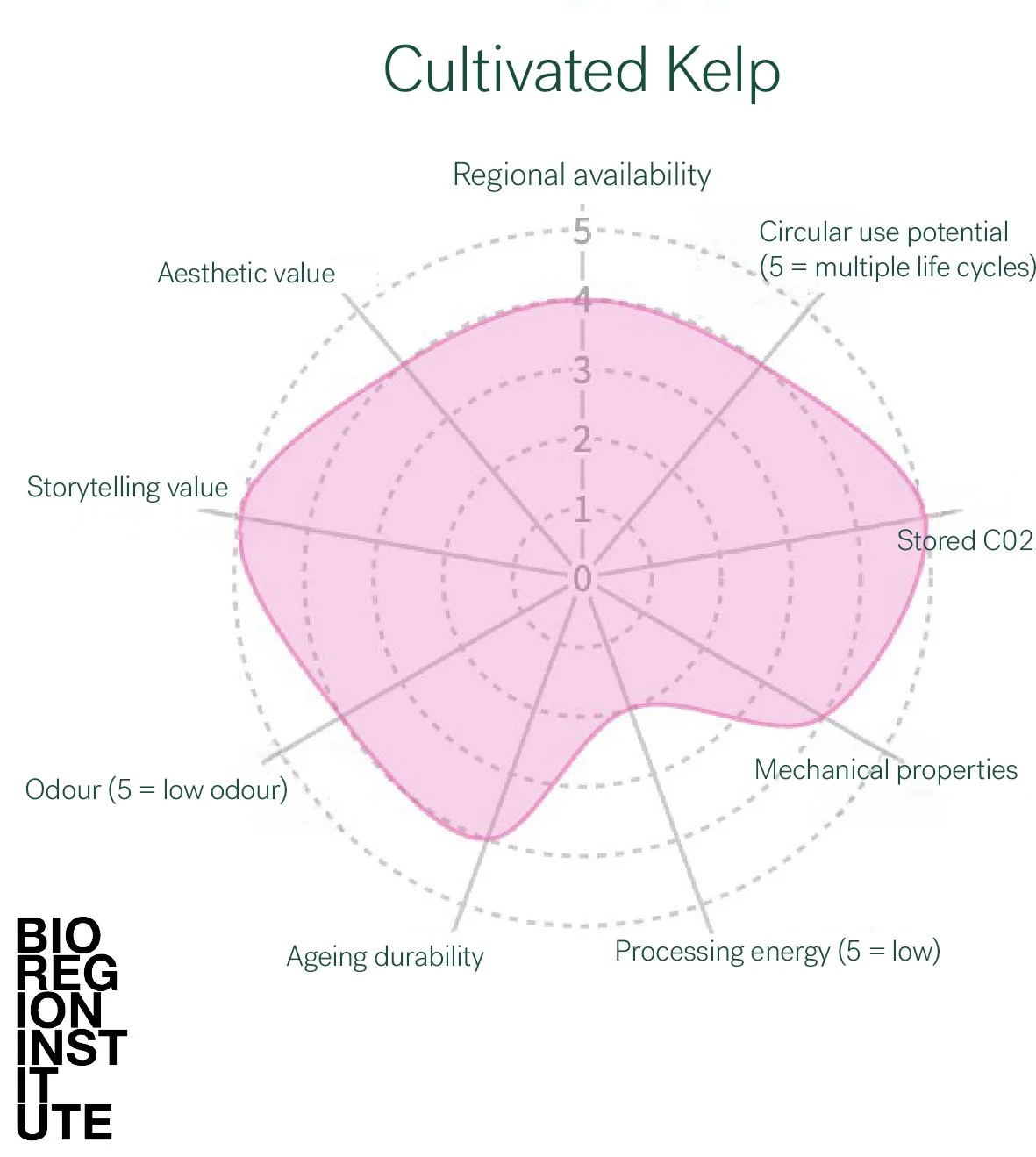
The biggest producer for both cultivated and harvested kelp is Norway. European production has a potential of 15,000 tons annually, but is struggling to scale up because of a lack of market to sell to.
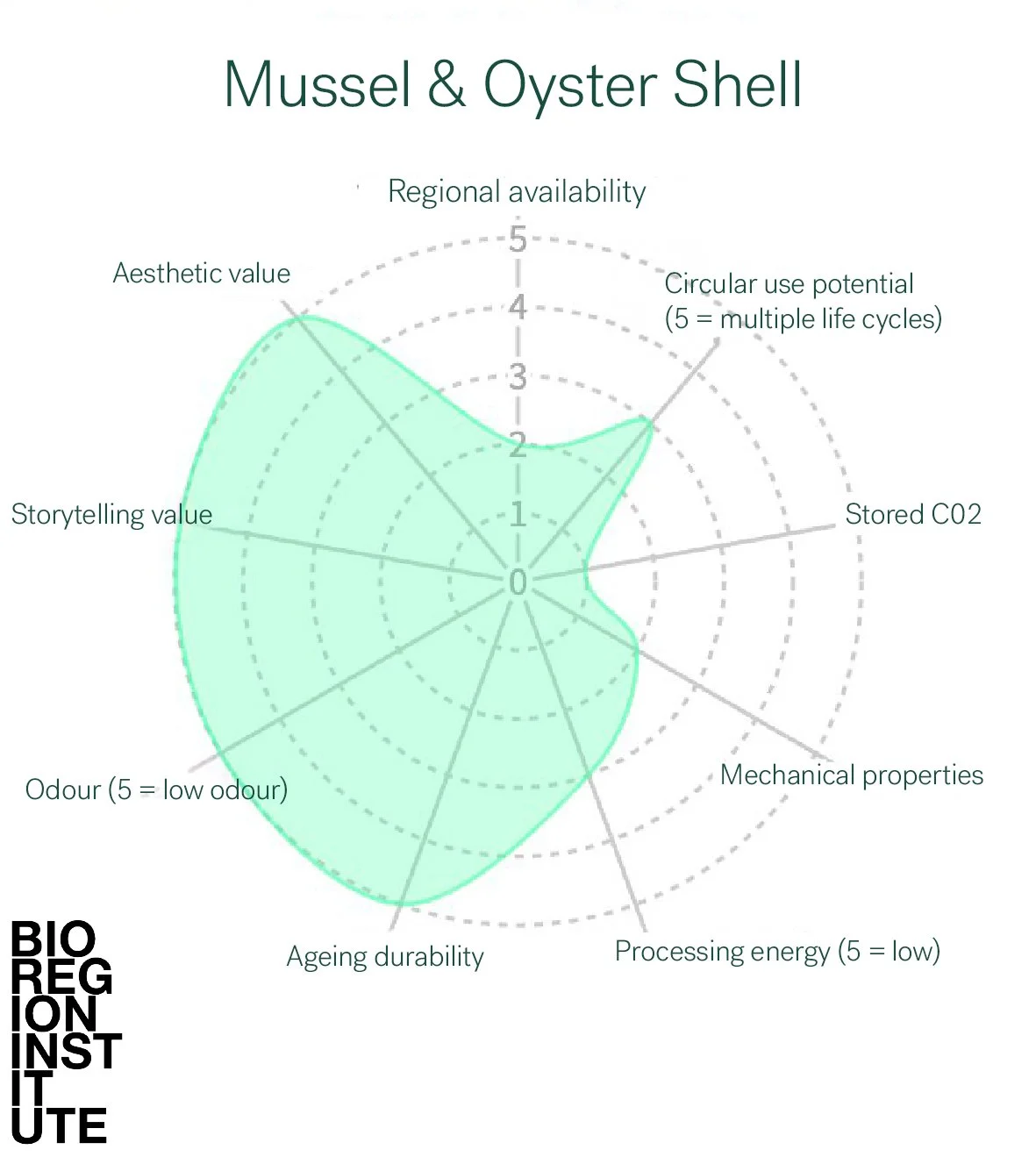
The shells of Blue mussels and oysters weigh on average 35% and 80% of total mass respectively. Together they represent half of the total seafood market, 553 000 tonnes volume in Europe.
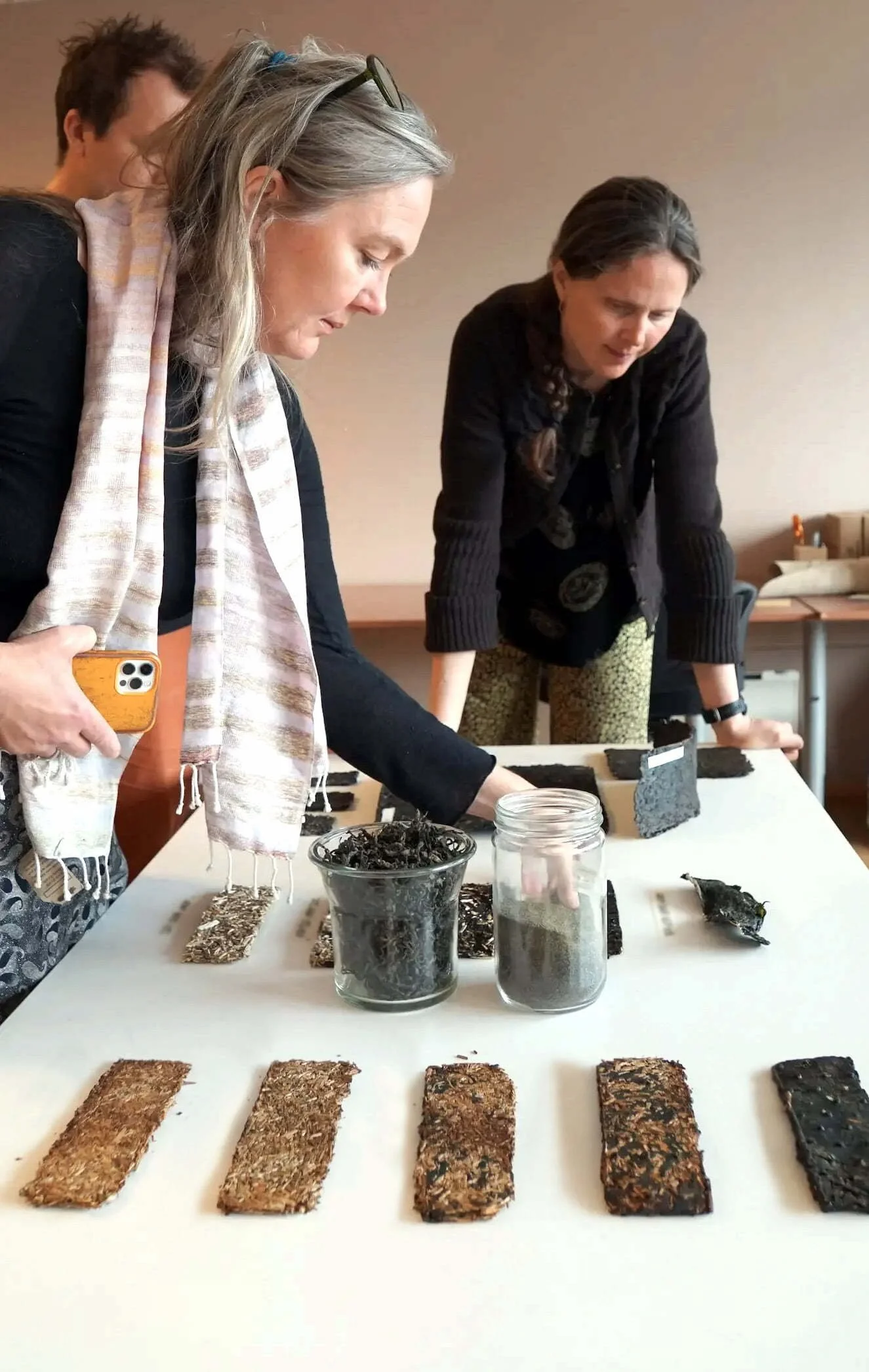
Once set, these basic samples offer a first glimpse of potential - how the materials combine, the colour when adding a binding agent, and some idea on their scent. | Photo: Bioregion Institute & Flokk 2026.
“Biobased materials provide many aesthetic and sensorial possibilities and dimensions of place and time, that connect the product to localised bioregions and their biocircular systems.”
Why this matters
According to FLOKK, the material of a chair can account for up to 90% of its total climate impact, which makes material change central to furniture transition rather than secondary to it. For that reason, the project focuses on the material system itself: where it comes from, how it behaves, how it is processed, and how it might fit within circular and regenerative value chains.
From our perspective, this is also a bioregional design question. Biological materials carry traces of their origin through colour, texture, and seasonal variation, allowing a product to reflect the ecologies and side streams of a specific place rather than aiming for anonymous uniformity.
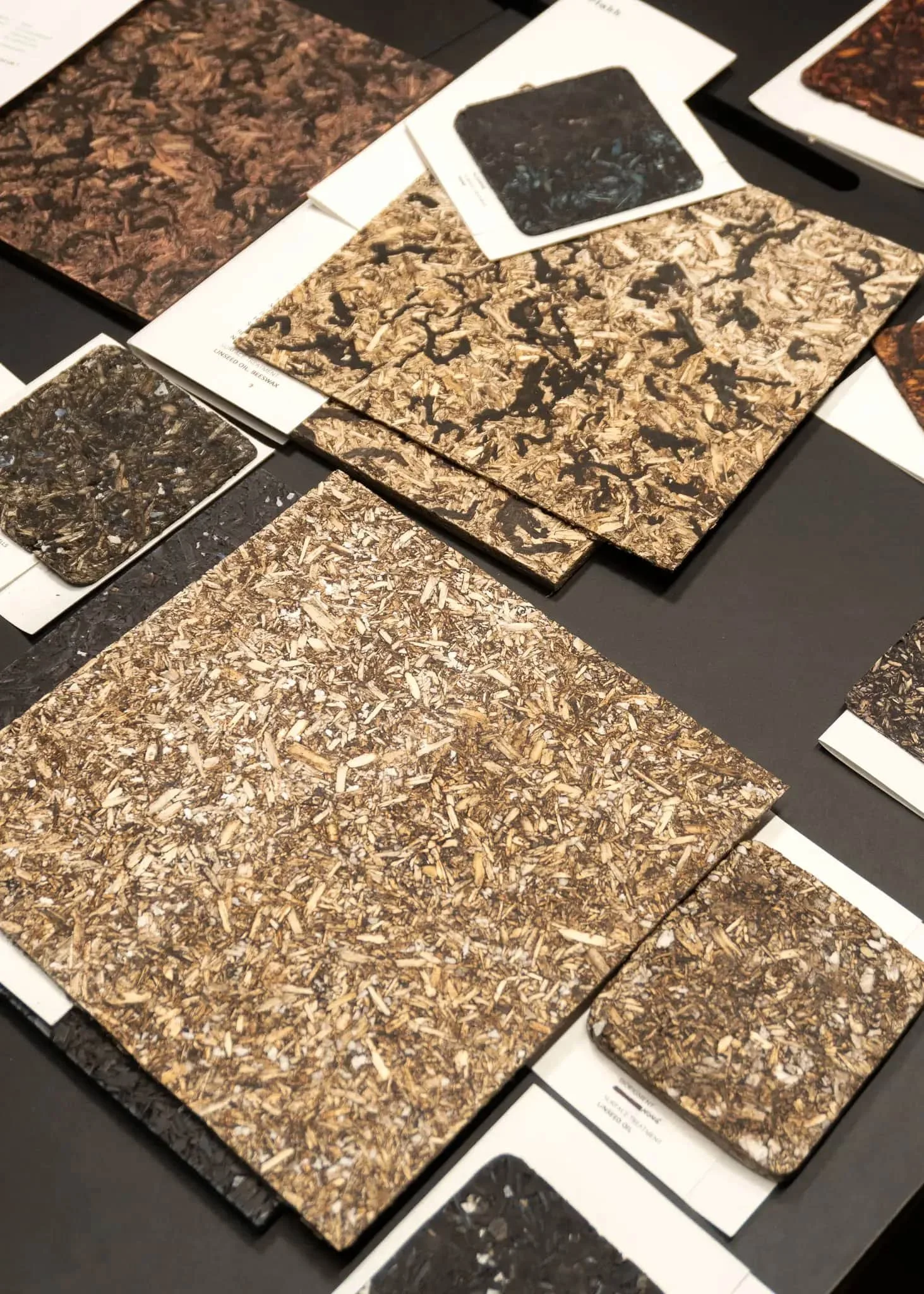
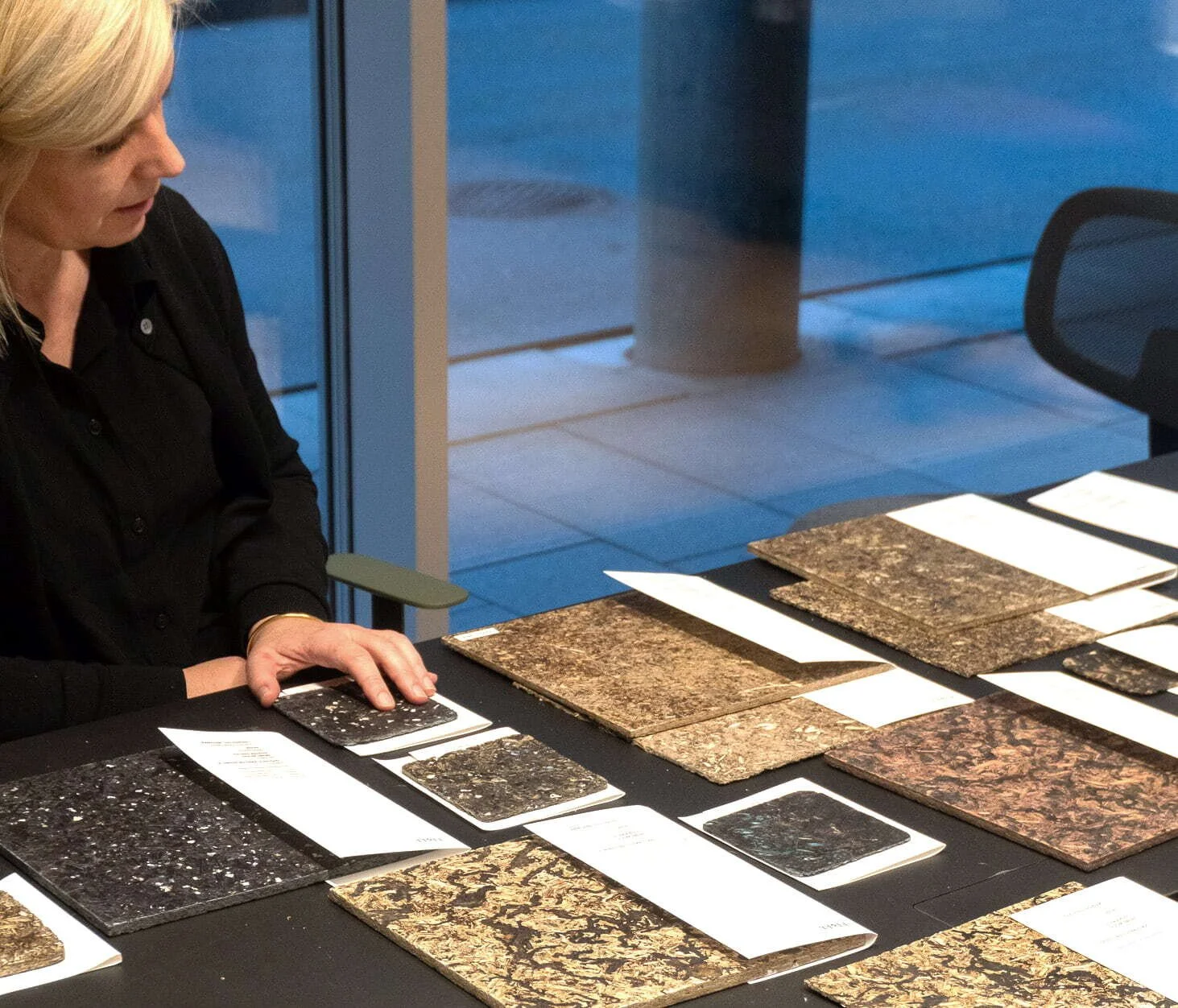
Flokk now have a selection of 25 prototype ideas to examine and work with, each with their own properties and qualities. | Photo: Bioregion Institute & Flokk 2026.
“Variation can be a strength adding character and narrative, but it must be balanced with a versatility that allows the material to work across a wide range of interiors.”
What we are doing
Our work combines material mapping, formulation, workshop-based prototyping, and early evaluation. Together with BioCeli and FLOKK, we are developing experimental composites by combining organic fillers and bio-based binders, then pressing them into panels and treating them with biodegradable finishes to observe how they respond in physical form.
This process is not only about environmental promise. It is also about testing whether these materials can balance performance, consistency, manufacturability, and expression in ways that are relevant to demanding furniture applications such as shells, panels, and backrests.
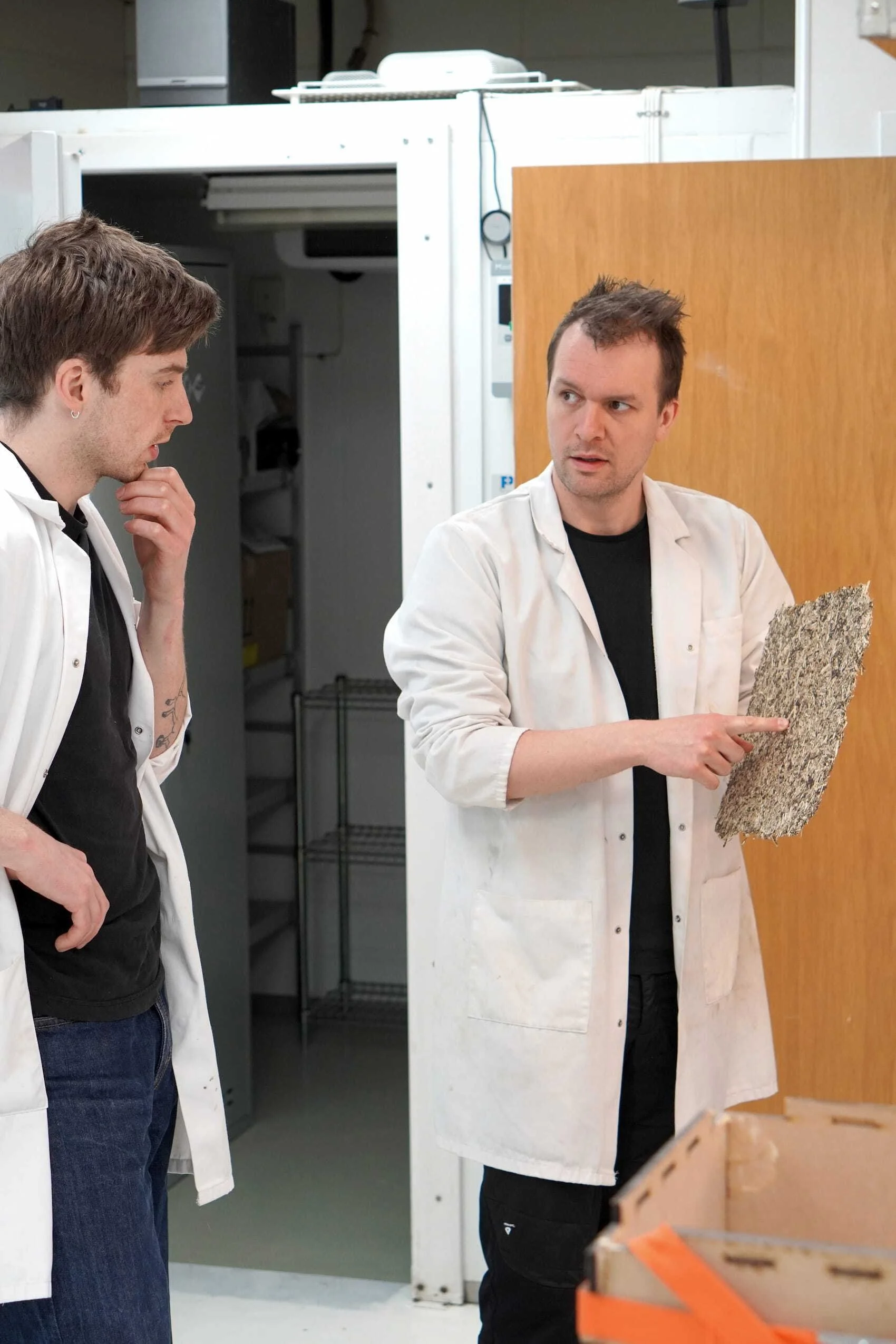
The next step was using a more advanced heatpress, to create larger samples, more inline with actual chair components. | Photo: Bioregion Institute & Flokk 2026.
Material direction
The project explores the potential of underused bio-based side streams that are already available in substantial volumes. Examples such as oat husks and discarded mussel and oyster shells, highlight the importance of working with materials that can support long-term production rather than niche or uncertain supply chains.
At the same time, this work challenges conventional ideas of material quality. The source material emphasizes that variation in tone, fibre expression, texture, and surface is not necessarily a defect; when performance remains reliable, those differences can become part of the value and identity of the object.
“Variations are inherent to all living materials, due to seasonal effects on the raw biomaterial inputs. When we embrace these irregularities as a value in the industrialised product, a whole new story unfolds. The chair becomes an expression of a bioregional locality and its weather, connecting us to the very nature, we as humans, are all a part of.”
Current stage
The project is currently in an active prototyping phase. Different material compositions are being mixed, pressed, finished, and observed in order to understand how they behave under pressure, how surfaces compact, how colour shifts across formulations, and how these early samples might translate into furniture components.
This stage has not resulted in a final material selection, and that is intentional. The present focus is on learning through making, then moving toward further testing around durability, quality control, and integration into existing manufacturing systems.
NB: Some of this content has been co-created/edited with Richard Ferris, FLOKK Content Manager. We invite you to browse FLOKK Sustainability here sharing our work together with Bioregion Institute via their “latest sustainability stories”.
Delivery
Novel biomaterials viable for office chair production
Timeline
since 2025 - ongoing
Research team
Birgitta Ralston
Lars Haugen Aardal
Alexandre Bau
Client
Flokk
Marianne Sælid
Pernille Jensen Stoltze
Gudrun Reikvam