AHO Bioregional Days
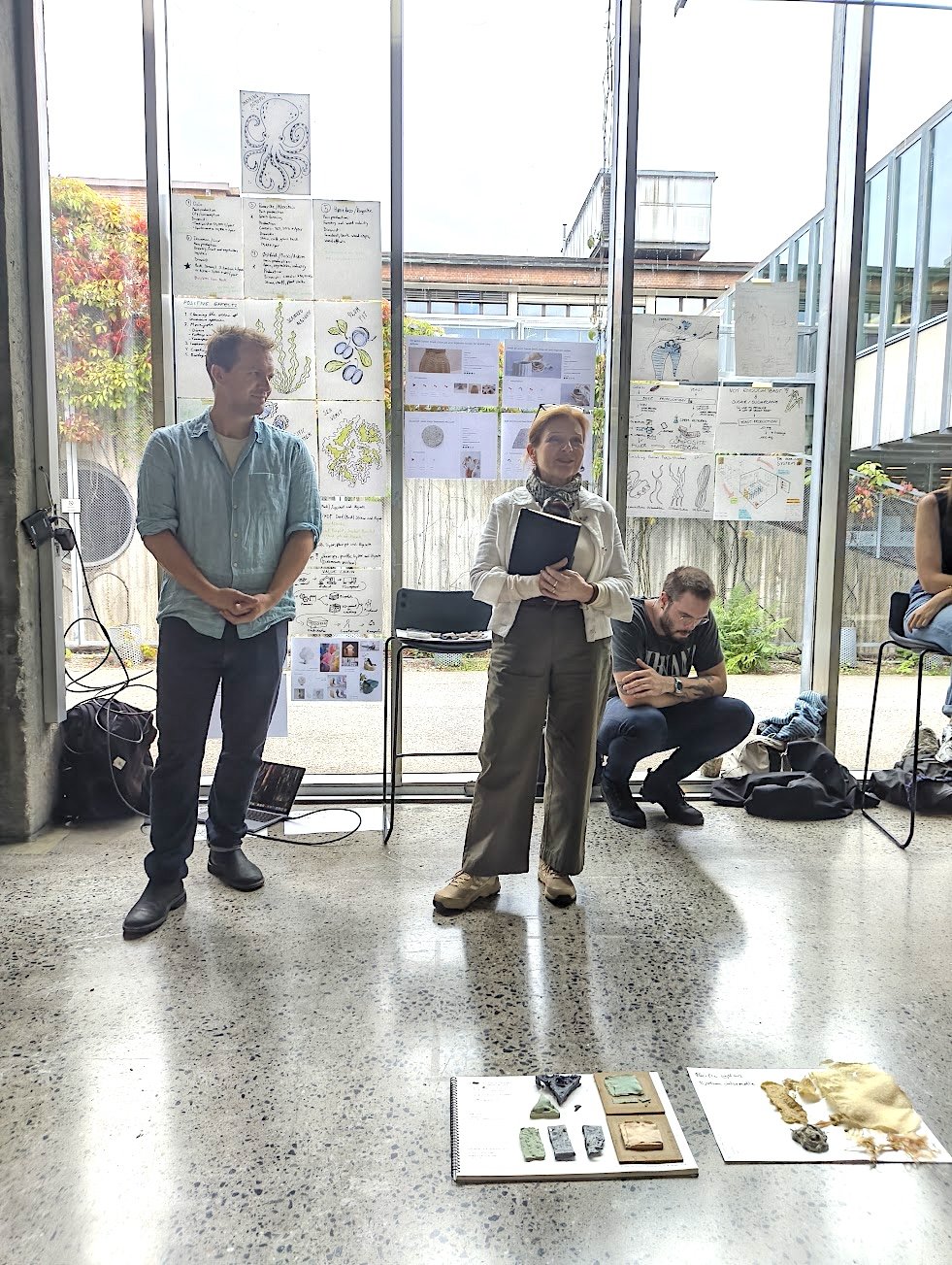
From left to right: Lars Haugen Aardal, Head of Lab at Bioregion Institute, Hilde Angelfoss, Head of Design at AHO.
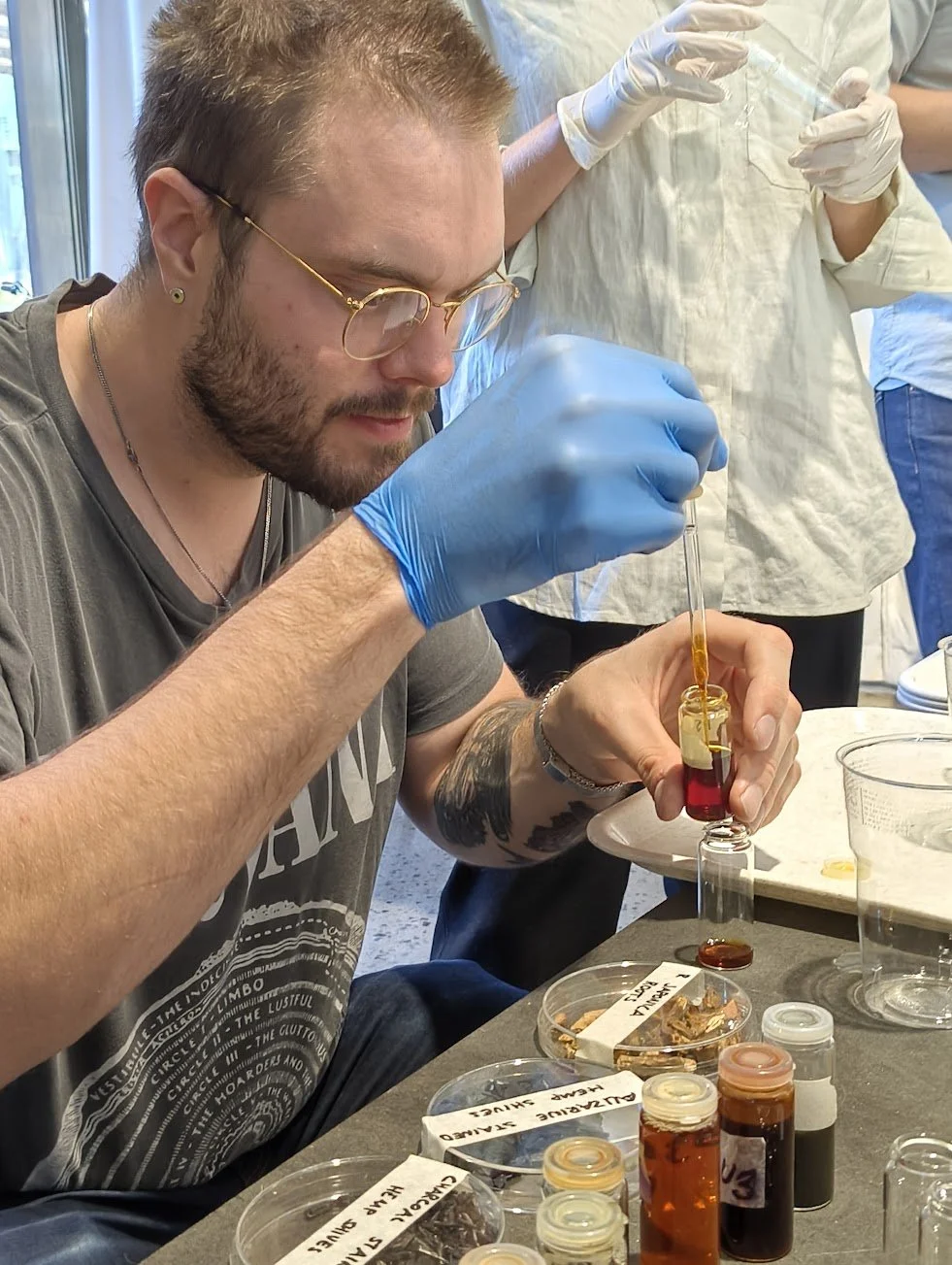
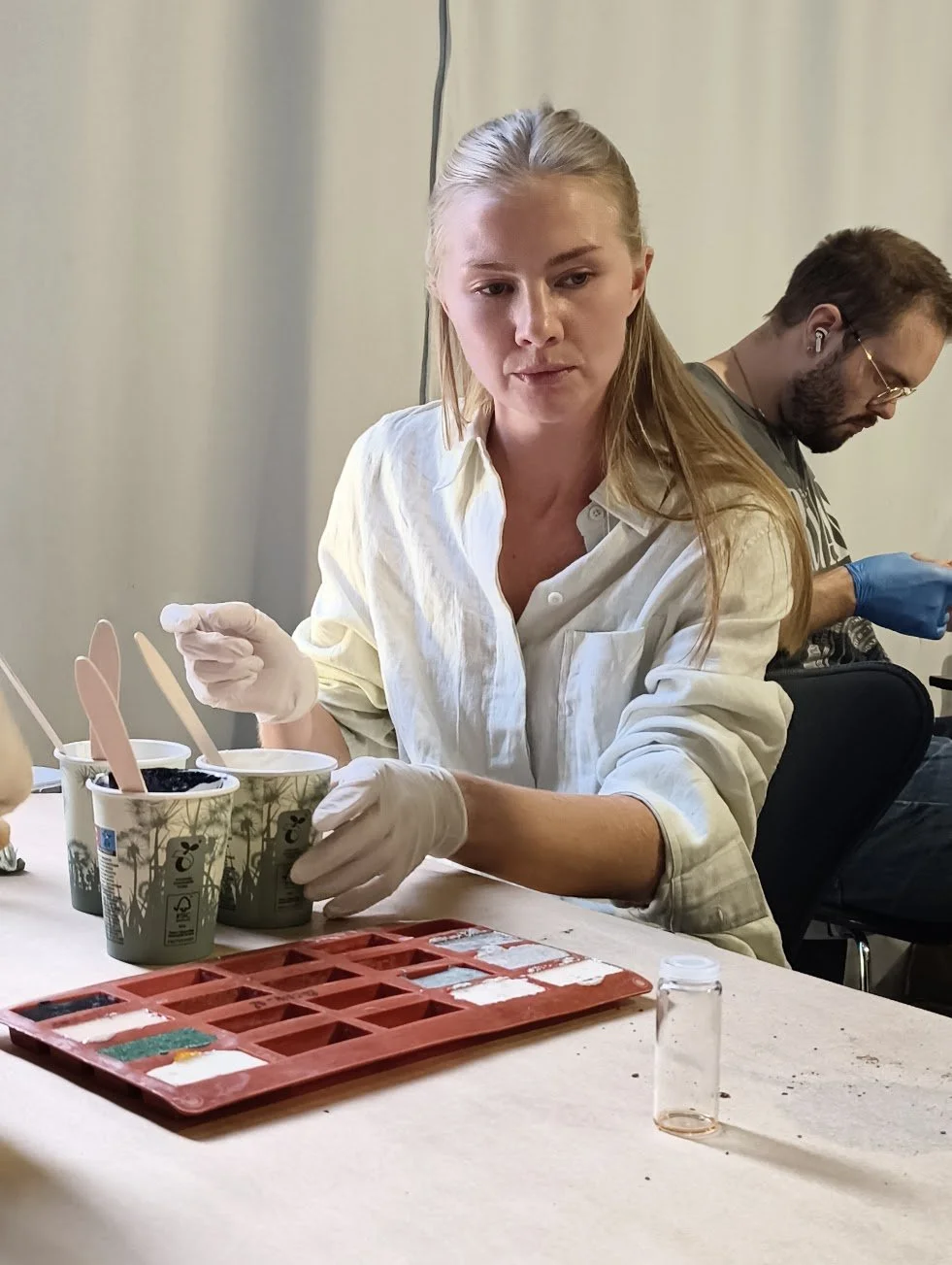
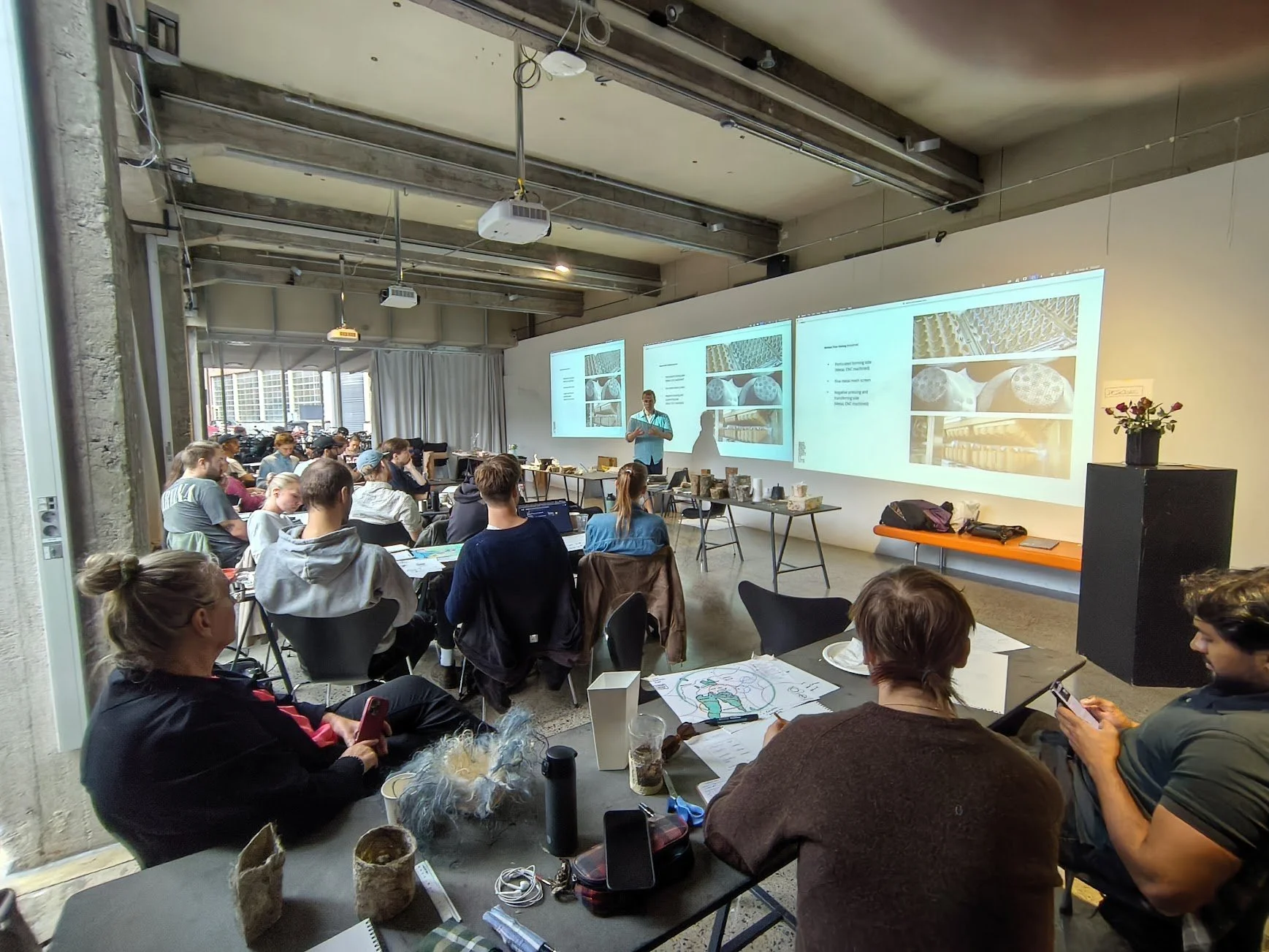
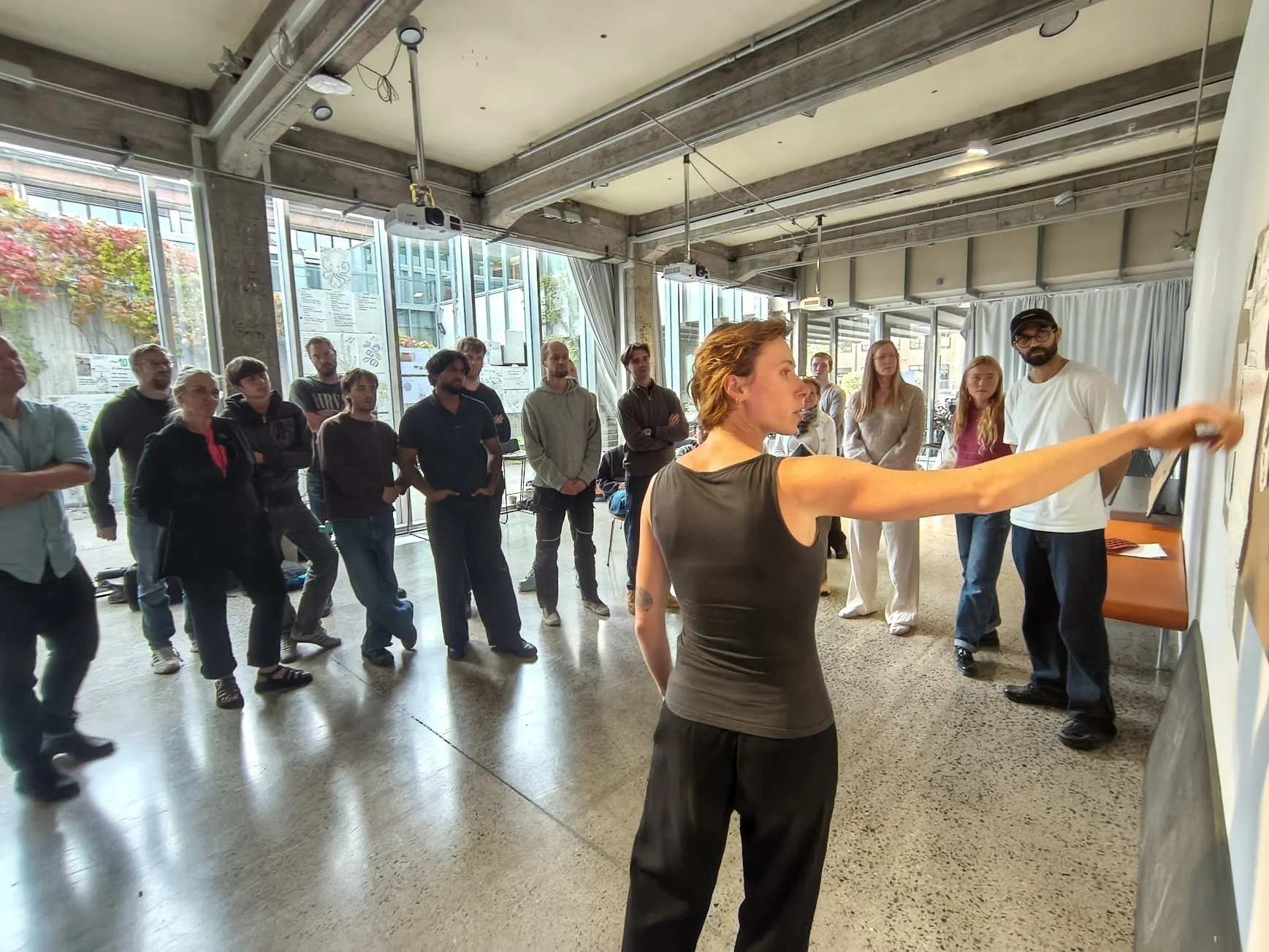
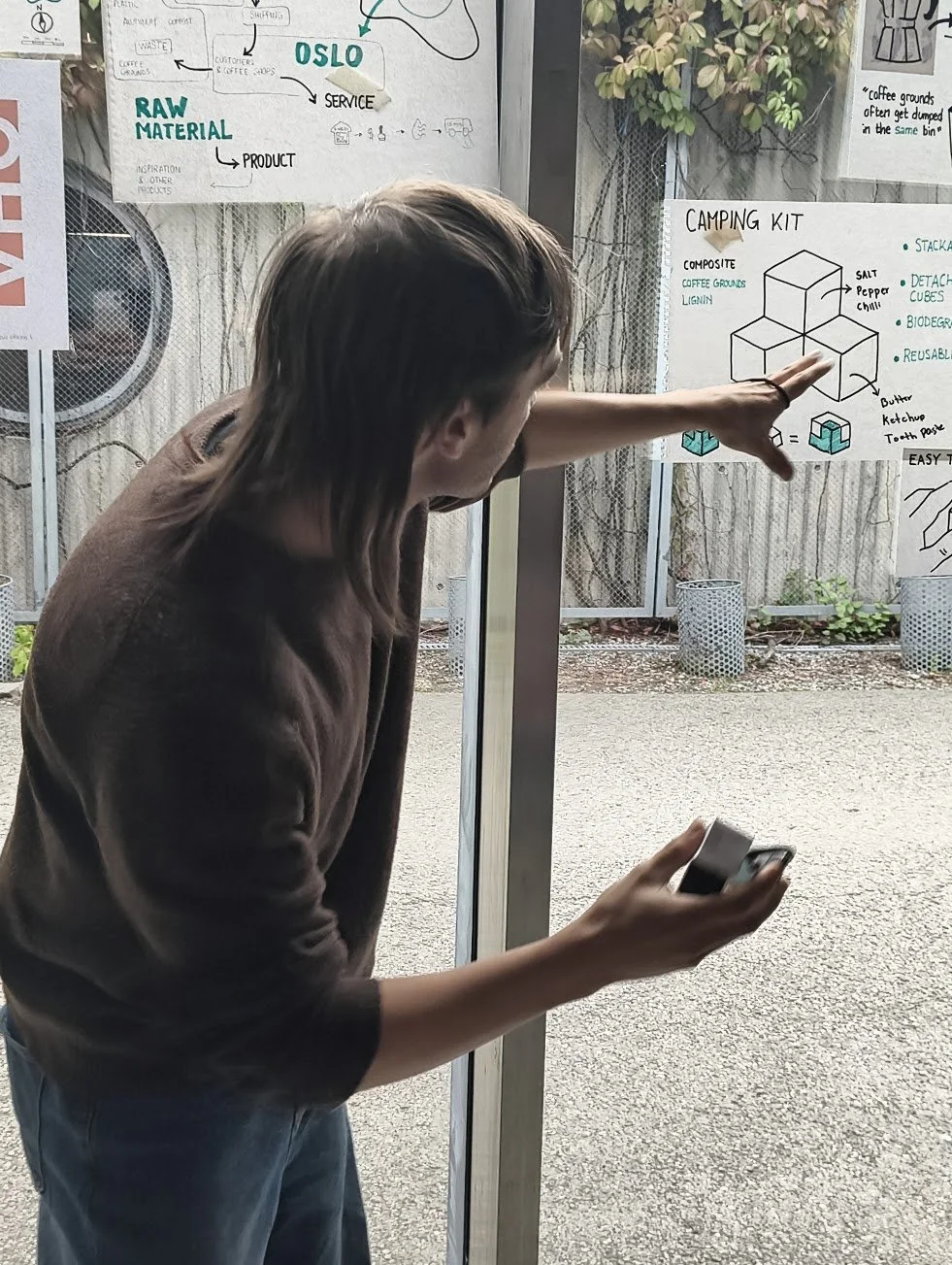
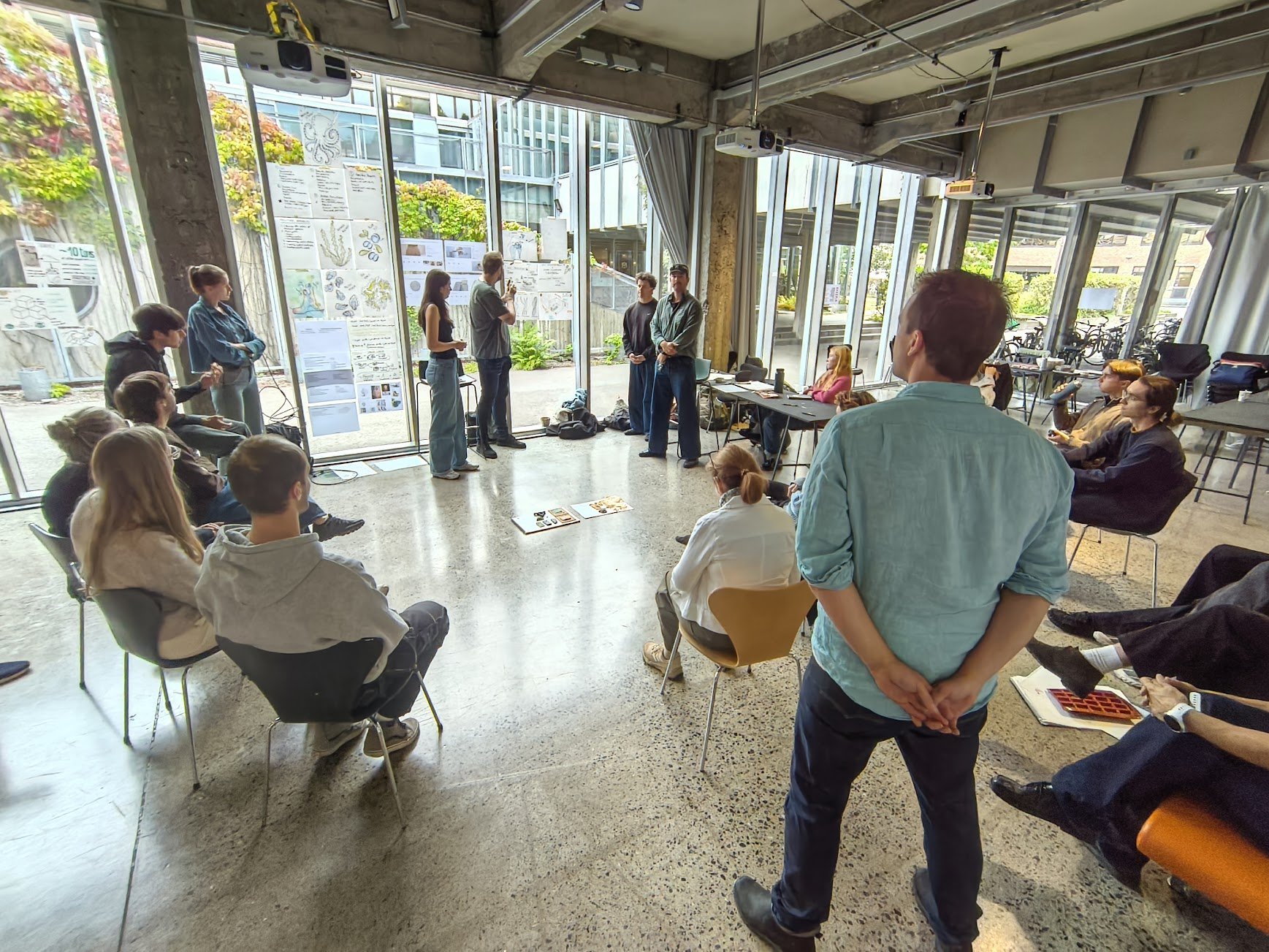
We led a three days workshop at the Oslo School of Architecture and Design in August 2026 during which we shared our Regenerative design practice. Master students in Design were invited to go through several process such as mapping their bioregional residual biomass, modelling bespoke bio-based and biodegradable material samples and designing tailored scenarios unleashing their potential, economically, environmentally, industrially. The results were articulated different robust horizons, comprehensive and novel. From oysters shells, draff, to coffee grind and fruits residues, meaningful scenarios were drafted and shared, with coherent novel value chains and outcomes.
In order to design solutions for the future, industrial designers need to have a conceptual and methodological understanding; they also have to understand the impacts and value chains of the materials used for creating products.
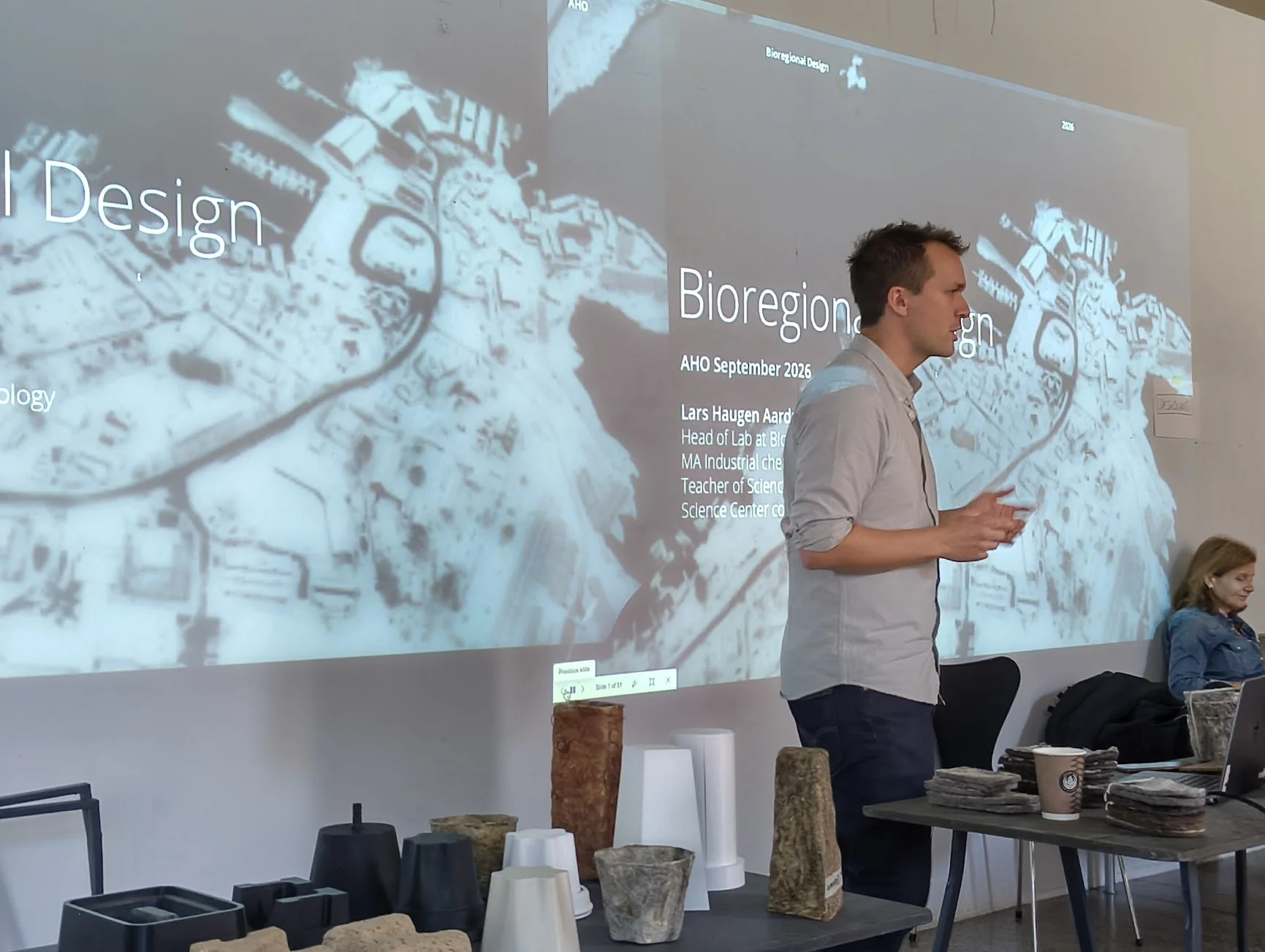
Students were asked to understand the big picture, and the “why” and “from what” of design is just as important as the “how” when making something new. Through a three day workshop with master students from AHO, we shared our map-model-design-scale process and cases from our professional life to give insight to how regenerative design can be used to create a better materials future. The students were tasked to identify and map their own bioregions, model how byproduct raw materials can be made into truly bio-based and biodegradable materials, and design how these materials can become products with bioregional value chains.
The workshop allowed the students insight into the challenges we face when working towards a paradigm shift in how we manage sustainability in our use of materials. Bringing design and materials expertise to AHO and showing the benefits of working together across fields brings the importance of interdisciplinary understanding.
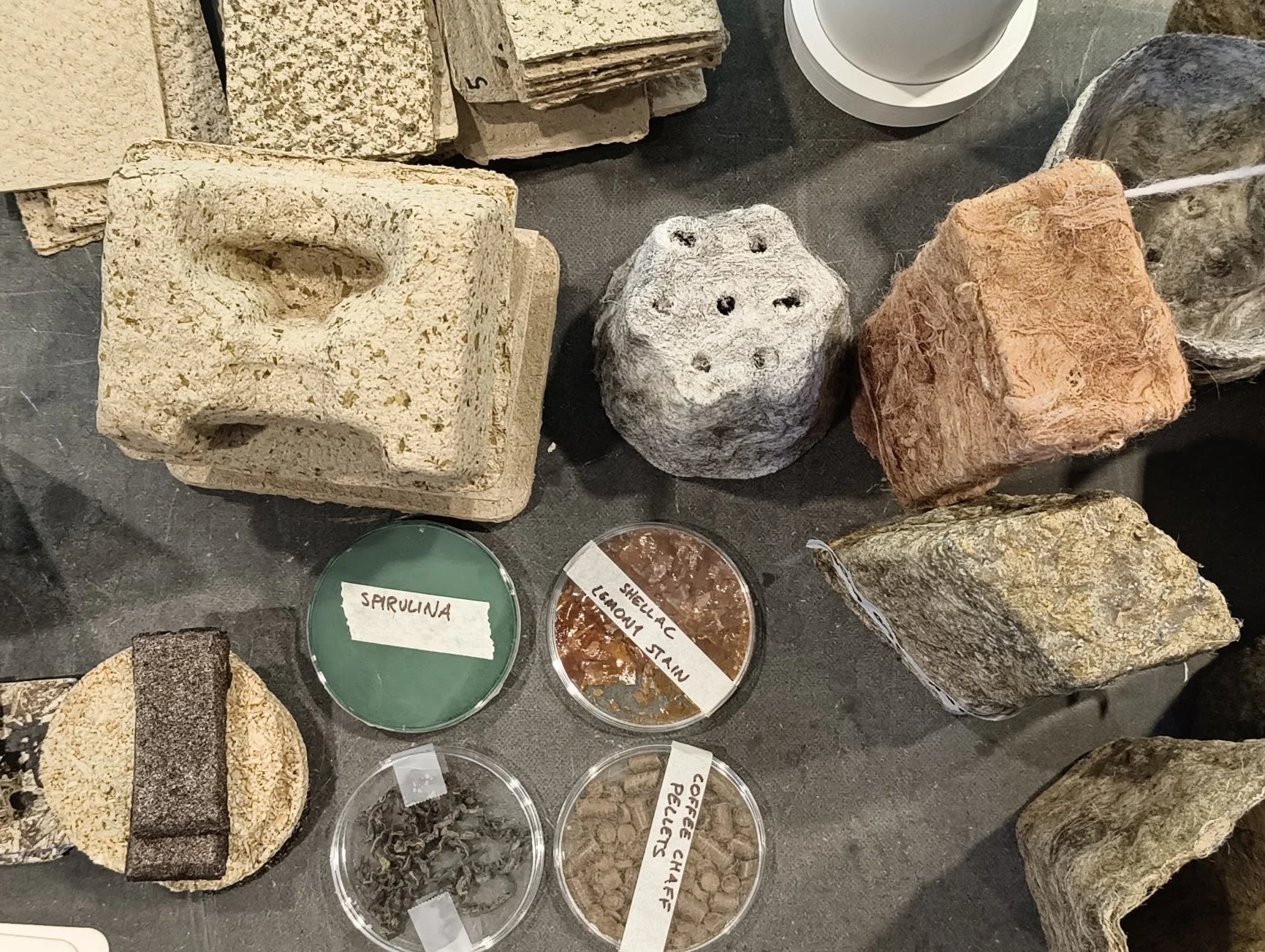
Bringing a part of our Biolab, sample raw materials, and examples of materials and prototype to the workshop, students could utilise their creativity and gain hands-on experience with bio-based raw materials and how they can be utilized to create new materials. Hopefully, we have influenced the students in their choice of materials and fostered their abilities to see the bigger picture.
From waste to grace.
Focus: Academia
Aim: Sharing Regenerative Design practice within Design academia field
Our role: Regenerative design practice, material exploration, visualisation, mentoring
Project lead: AHO Design - Hilde Angelfoss
Timeline
2026